The fluorescent lights of the breakroom flicker with the kind of soul-crushing intensity only a middle manager could love.
Key and Peele have always had a surgical precision for dissecting the awkward social hierarchies of modern life, but their take on the reality television trope of the Undercover Boss is a masterclass in escalating absurdity.
The premise begins with the familiar, high-definition gloss of a network TV special, introducing us to a high-ranking executive who believes he can bridge the gap between the C-suite and the cubicle through the power of a cheap polyester wig.
Jordan Peele’s character enters the workspace attempting to act cool and relatable, but he immediately stumbles into a bizarre and confusing persona that feels more like an alien trying to mimic human speech than a CEO in disguise.
Between thirty and fifty-eight seconds into the footage, we see the executive’s desperate attempt to blend in with the workforce using an exaggerated and painfully outdated persona.
He uses slang that hasn't been relevant since the mid-nineties and assumes a posture of forced casualness that only serves to alienate the very people he is supposed to be inspiring.
This massive gap between management and staff is played for maximum discomfort, as the employees stare back with the blank, exhausted expressions of people who just want to finish their shifts.
The executive believes he is being a corporate mentor, a man of the people who is finally seeing the raw, unvarnished truth of his company’s operations.
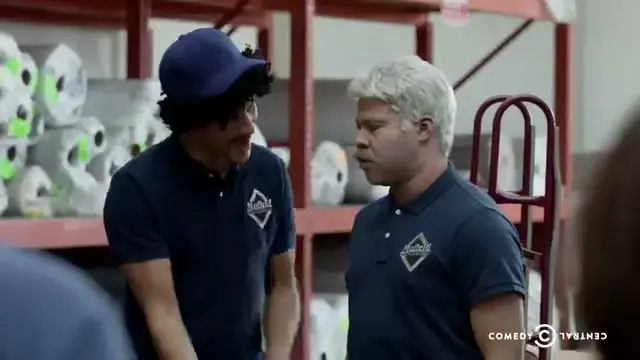
In reality, he is a walking disaster of ego and misunderstanding, proving that the more management tries to relate to the ground floor, the more they reveal their own utter disconnect.
As the disguise holds up by a single thread of spirit gum, the narrative takes a sharp, jagged turn into the personal grievances that simmer beneath the surface of corporate civility.
The turning point comes around the two-minute mark when the undercover boss completely breaks character to aggressively confront an employee about a personal grudge involving a sandwich.
What was supposed to be a moment of professional observation transforms into a petty, high-stakes rivalry over a lunchroom incident that happened months ago.
The CEO’s disguise fails to hide his intense resentment as he leans in close, his voice dropping the forced 'cool guy' register for a tone of pure, unadulterated venom.
This absurd shift from a high-minded corporate mentor to a petty, vindictive rival is the peak of the sketch’s comedy.
It exposes the fallacy of the benevolent leader who claims to care about the collective while secretly nurturing a list of minor slights and stolen office supplies.
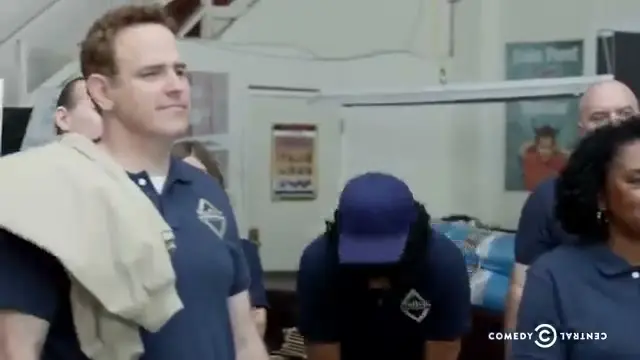
The employee is left bewildered, caught in the crosshairs of a man who has the power to fire him but the emotional maturity of a toddler in a boardroom suit.
Every corporate platitude about 'teamwork' and 'synergy' evaporates in the heat of this unprofessional public confrontation over ham and rye.
The sketch continues to build on this tension, refusing to give the audience the heartwarming resolution they have been conditioned to expect from this genre of reality television.
Usually, these shows end with a tearful reveal where the boss hands out checks for college tuition or pays for a dedicated worker’s medical bills.
Key and Peele subvert this trope entirely during the big reveal at the three-minute and thirty-five-second mark.
Instead of a moment of emotional catharsis or corporate redemption, the scene dissolves into a chaotic and vengeful firing spree.
The CEO yanks off his wig not to embrace his employees, but to settle every petty score he has accumulated during his brief time undercover.
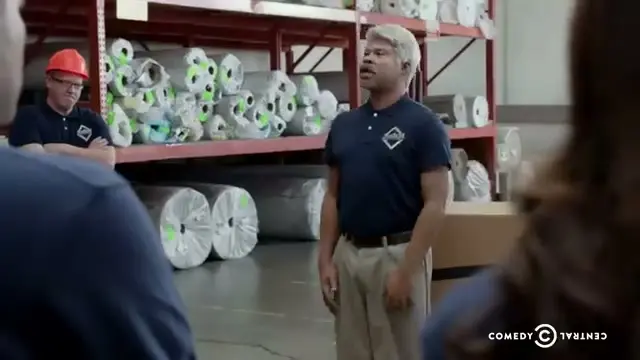
He points fingers with manic energy, terminating contracts for the smallest perceived infractions and laughing at the shock on his staffers' faces.
It is a shocking twist on the format that feels more honest than the actual shows it parodies.
Instead of rewards, the employees face a chaotic termination session fueled by the boss's newfound knowledge of their private complaints and personal habits.
The corporate mask doesn't just slip; it is torn off to reveal the predatory nature of a system that values surveillance over support.
By the time the credits roll, the office is a wasteland of pink slips and shattered expectations.
Key and Peele remind us that when the boss goes undercover, they aren't looking for ways to help the staff, but rather for new reasons to exert their absolute power.
This remains one of the sharpest critiques of labor relations ever aired on a comedy network.
The sketch leaves us wondering if the true disguise wasn't the wig, but the idea that the people at the top ever cared about the people at the bottom.
Watch full video here: