A simple morning weather forecast transforms into a chilling social commentary as soon as the words black ice are uttered by the anchor.
The sketch begins in a mundane news studio with two anchors, a man and a woman, warning their viewers about the treacherous road conditions awaiting them outside.
They speak with a gravity usually reserved for active shooters or natural disasters, painting a picture of a hidden menace lurking in the shadows of the asphalt.
When the field reporter, played by Jordan Peele, joins the broadcast, the linguistic shift becomes impossible to ignore.
The anchors describe black ice as a sneaky and transparent threat that can rob you of your balance and your dignity in an instant.
They personify the ice with a vocabulary that mirrors the coded language often used in news coverage of urban crime.
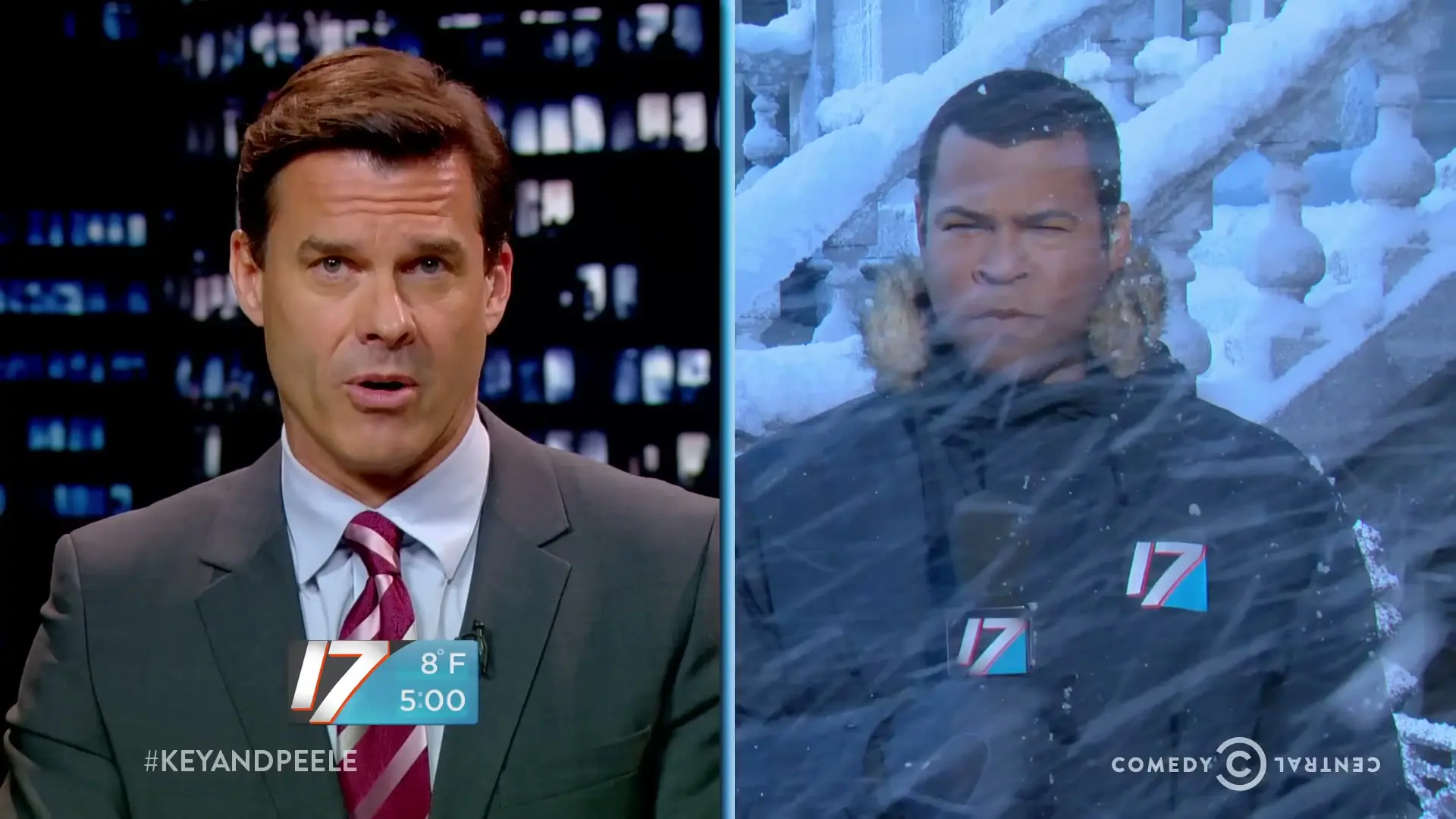
Peele’s character stands in the freezing cold, visibly confused by the escalating rhetoric coming from his colleagues in the warm studio.
He tries to point out that the ice is just a natural phenomenon, a byproduct of water freezing on a dark surface.
However, the anchors reinforce the idea that black ice is a predator that just keeps on taking.
They suggest that even if a neighborhood is safe, the sudden appearance of black ice can ruin the entire atmosphere and make residents feel insecure.
One of the most biting moments of the segment occurs when the reporter attempts to pivot the conversation toward white ice.
He asks the studio why no one is warning the public about the dangers of white ice, which is just as slippery and hazardous to drivers.
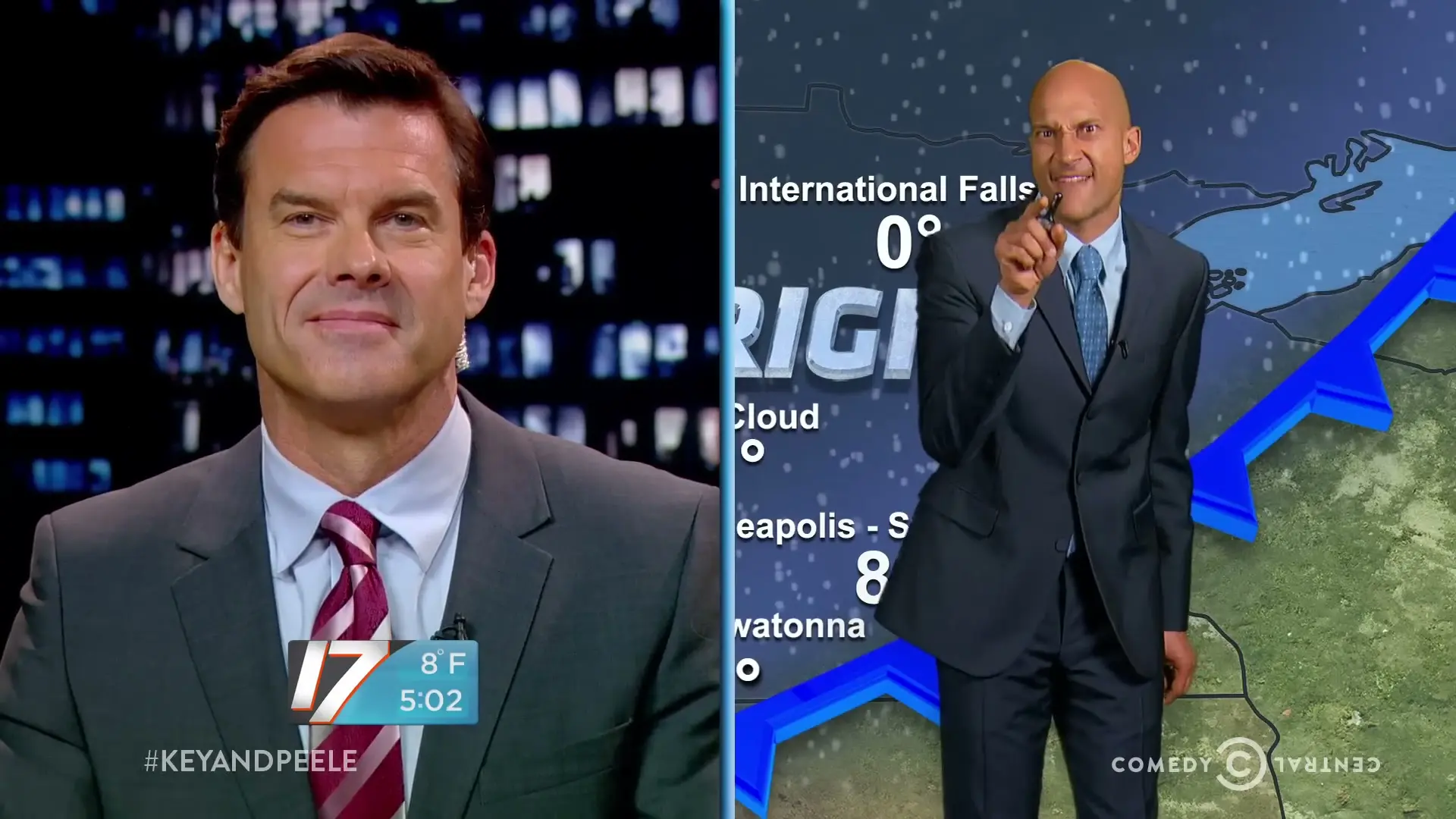
The reaction from the anchors is immediate and defensive.
They quickly dismiss his concerns, reframing white ice as bright, visible, and essentially harmless compared to its darker counterpart.
They praise the visibility of white snow, suggesting that it provides a sense of clarity and safety that black ice inherently lacks.
This double standard serves as a sharp punchline that exposes how societal perceptions are shaped by color-coded descriptors.
The satire reaches a fever pitch when the broadcast features a testimonial from a victim who was surprised by the ice.
The victim speaks about the encounter as if he had been Mugged by the pavement itself.
He laments how the ice took everything from him, emphasizing a total loss of control that feels more like a criminal encounter than a slip-and-fall accident.
Throughout the three-minute runtime, Key and Peele masterfully deconstruct how media narratives can weaponize fear through seemingly objective reporting.
The logic of the newsroom completely breaks down by the end of the segment, leaving the reporter isolated in his common sense.
The commitment to the bit is absolute, with the actors maintaining a straight-faced delivery that makes the absurdity feel terrifyingly real.
By the time the cameras cut back to the weather map, the metaphor has been fully realized, leaving the audience to question the subconscious biases embedded in their daily news cycle.
It remains a definitive example of how comedy can peel back the layers of systemic prejudice using nothing more than a winter weather advisory.
As the segment concludes, the viewer is left wondering if they will ever look at a winter forecast the same way again.
Watch full video here: